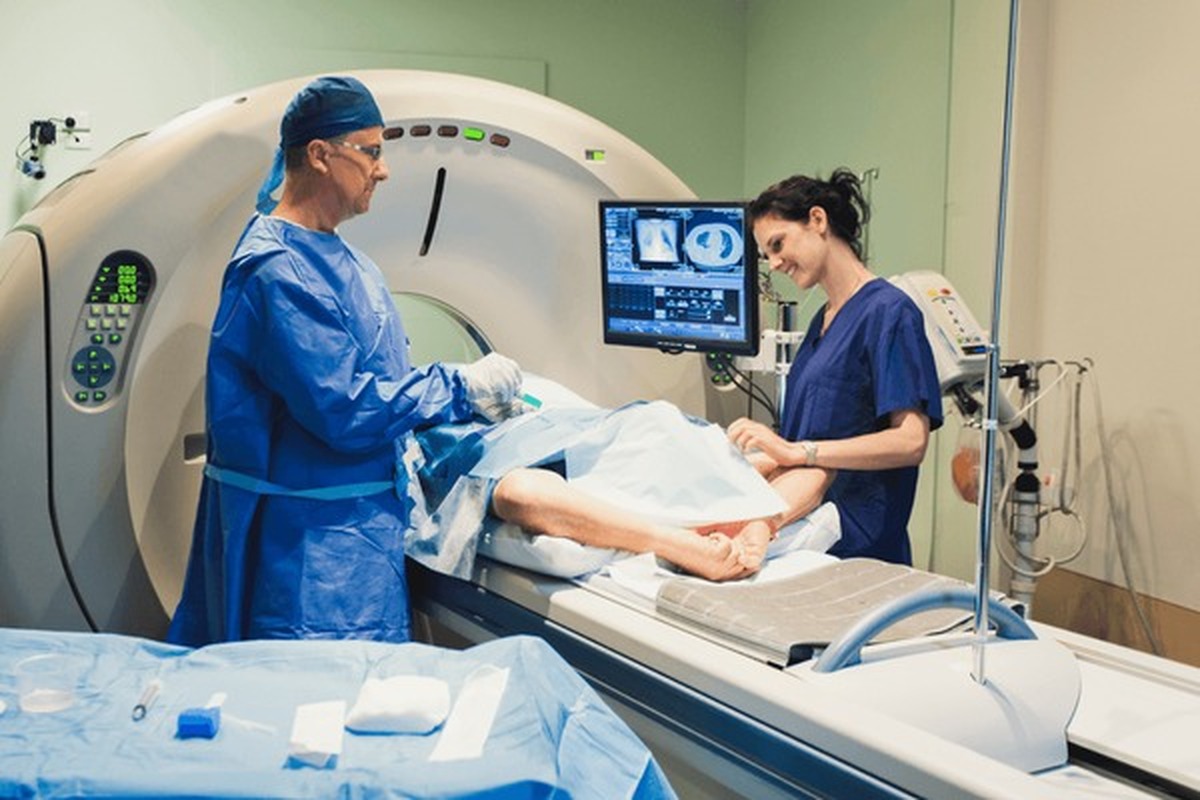
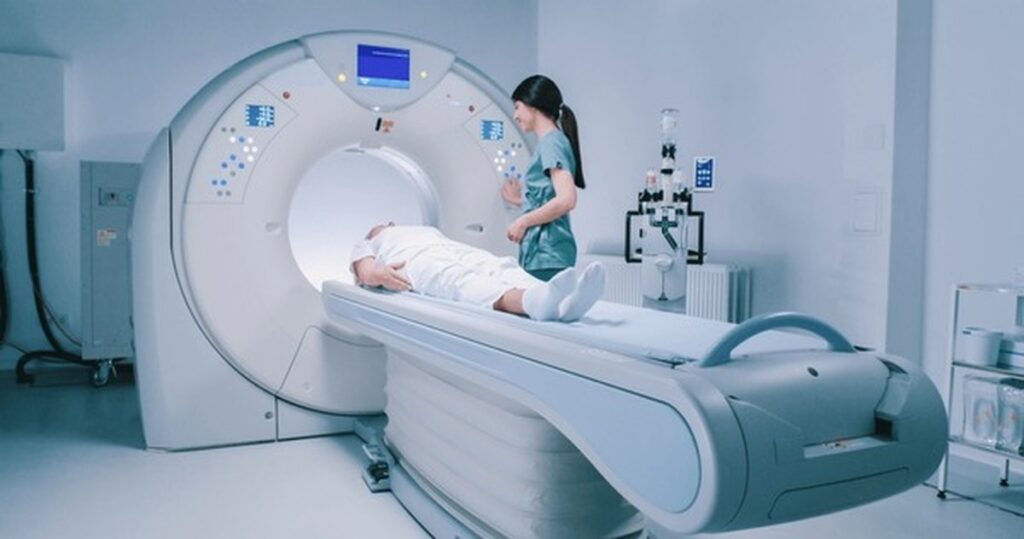
MR safety is the area where an exam error maps most directly onto a real fatality, and the examiners write questions accordingly. It is also the one topic where the cautious option is almost always correct.
The magnet is always on
There is no “off” between patients, and no visible, audible or tactile warning that you are approaching a field strong enough to turn an oxygen cylinder into a projectile. Every rule that follows exists because of that one fact.
Know the zones precisely
- Zone I — freely accessible public area.
- Zone II — the interface: reception, changing, screening happens here.
- Zone III — physically restricted by lock or key access. The control room sits here.
- Zone IV — the magnet room itself.
Two facts get tested repeatedly: Zone III must be physically secured, and Zone IV is the scanner room.
“MR Conditional” is not clearance
Three labels exist: MR Safe, MR Conditional and MR Unsafe. The one that generates questions is the middle one, because the label alone tells you nothing useful. Conditional means safe only under stated conditions — a maximum field strength, a spatial gradient limit, SAR limits. An implant conditional at 1.5T is not thereby safe at 3T.
Reading “MR Conditional” and proceeding without checking the specific conditions is a serious error, and any option that does so is wrong.
Unknown status is not permission
If an implant cannot be identified, the patient is not scanned. Absence of documented risk is not evidence of safety. The classic case is an aneurysm clip of unknown type: older clips were ferromagnetic, and without documentation the clip must be treated as unsafe, because the failure mode is catastrophic and irreversible.
The correct sequence is stop, seek documentation, check against the manufacturer’s conditions, escalate — and ask whether another modality would answer the clinical question instead.
The scenario that keeps appearing
An unscreened person needs to enter urgently — a porter, a family member, a resuscitation team. The correct answer always prevents entry until screening is complete. In a cardiac arrest in the scanner, the patient is removed from Zone IV to the team; the team does not come in with a ferromagnetic trolley and defibrillator.
What patients forget to mention
Ask specifically rather than generally. A history of metal grinding without eye protection warrants orbital radiographs before scanning. Transdermal patches can have metallic backing and have caused burns. Abandoned pacing leads can heat at the tip even with no device attached.
Preventing burns
Most reported MR incidents are burns, and most are preventable: no skin-to-skin contact, no cable loops, no cable against skin, and the patient not touching the bore wall. Clasped hands form a conductive loop — pad between them.
CAMRT Preparatory Classes is an independent exam preparation service. We are not affiliated with, endorsed by, or acting on behalf of the Canadian Association of Medical Radiation Technologists. Always confirm exam dates, fees and eligibility against the official CAMRT candidate handbook for your sitting.
Preparing for your sitting?
Tell us your discipline and exam date and we will suggest a realistic study plan.